Investment Property Loan in Minnesota
Ready to grow your portfolio? Let’s find the right financing for your next property.
If you’re looking to buy a rental property or grow your real estate portfolio in Minnesota, financing an investment property works differently than buying a primary residence. The guidelines are stricter, the down payment requirements are higher, and the lender scrutinizes the deal more carefully. That’s just the reality of investment property lending.
But there are more options than most investors realize. And as a broker, I can shop your file across multiple lenders to find the program and rate that actually fits your situation — not just whatever one bank happens to offer.
How an Investment Property Loan in Minnesota Works
Lenders view investment properties as higher risk than primary residences. The thinking is straightforward: if things get tight financially, most people will protect the roof over their head before they protect a rental property. That means lenders apply tighter standards to offset that risk.
Here’s what that typically looks like in practice:
Higher down payment. Most conventional investment property loans require 15% to 25% down depending on the property type and your overall profile. Single-family rentals can sometimes go as low as 15% with strong credit. Multi-unit properties typically require 25% down.
Higher interest rates. Investment property rates run higher than primary residence rates — typically 0.5% to 1% higher depending on the lender and your credit profile. That difference matters when you’re running cash flow projections, so it’s worth getting accurate numbers before you finalize your offer.
Stricter debt-to-income requirements. Lenders look at your full debt picture including existing mortgages, and qualifying can get complex once you have multiple financed properties. This is another area where having a broker who knows which lenders are most flexible on investment property DTI makes a real difference.
Cash reserves required. Most lenders want to see reserves covering several months of mortgage payments on the investment property, and sometimes on your primary residence as well. Having liquid assets available strengthens your file significantly.
Conventional Investment Property Loans
The most common path for investment property financing is a conventional loan through Fannie Mae or Freddie Mac guidelines. These are standard 30-year or 15-year fixed rate loans, or adjustable rate options, underwritten the traditional way using your income, credit, and assets.
Conventional investment loans work well if you have strong W-2 or documented self-employment income, a solid credit score, and the down payment. They offer competitive rates compared to non-QM alternatives and are available for single-family rentals, condos, and 2-4 unit properties.
One thing to know: Fannie Mae caps the number of conventionally financed properties at 10. If you’re already at or near that limit, conventional financing may not be available and a DSCR loan becomes the more practical path. More on that below.
2-4 Unit Investment Properties
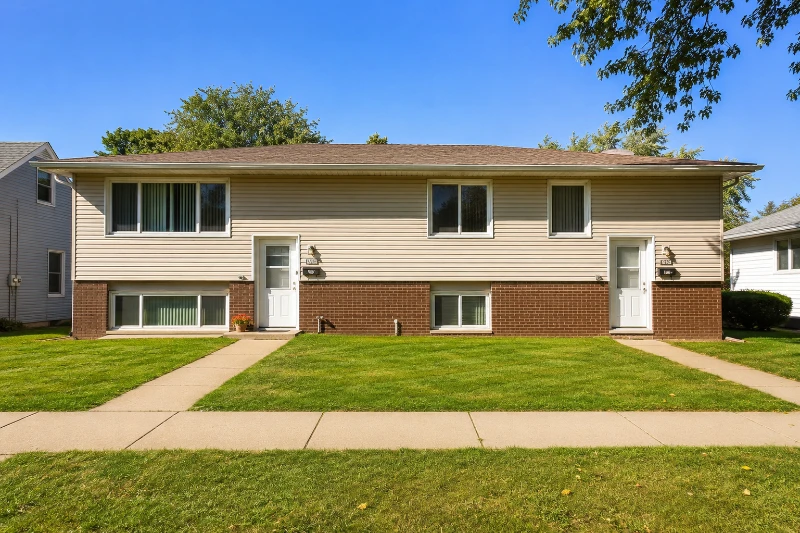
Multi-unit properties — duplexes, triplexes, and fourplexes — are a popular investment strategy in the Twin Cities market. The financing guidelines are slightly different from single-family rentals.
Down payment requirements are typically 25% for 2-4 unit investment properties. Lenders will often consider a portion of the rental income from the other units when calculating your qualifying income, which can help offset the higher payment on a larger loan.
If you plan to live in one of the units, the guidelines change significantly — that’s considered owner-occupied and opens up FHA and VA financing with much lower down payment requirements. That’s a completely different conversation and worth exploring if it fits your situation.
What About DSCR Loans for Investment Properties?
If your personal income is complex, your tax returns don’t reflect what you actually earn, or you’ve hit the conventional loan property limit, a DSCR loan is worth considering. DSCR stands for Debt Service Coverage Ratio — it qualifies you based on the rental income the property generates rather than your personal income documentation.
No tax returns, no W-2s, no employment verification in most cases. The lender looks at whether the property cash flows well enough to support the mortgage payment.
It’s a different program with different trade-offs, but for the right investor it’s the most practical path to growing a portfolio. Learn more on our DSCR home loan page.
Why Work With a Broker on an Investment Property Loan
Investment property lending is one of the areas where the broker advantage shows up most clearly.
Lender guidelines on investment properties vary more than on primary residence loans. One lender might require 25% down across the board. Another might go 15% on a single-family rental for a strong borrower. One might count 75% of rental income toward qualifying. Another might use a different calculation. One might have aggressive rates on 2-4 unit properties. Another might not.
When you go to your bank, you get their guidelines. I work with multiple lenders and I know how their investment property programs differ. I can match your specific deal — the property type, your down payment, your income structure, your existing portfolio — to the lender most likely to approve it at the best terms.
I’ve been doing this for over 24 years. Stephanie and I are right here in Bloomington. We work with real estate investors across the Twin Cities and greater Minnesota every day. Use our mortgage calculator to start running numbers, and check out current rates to see where the market sits.
If you’ve been declined somewhere else or you’re not sure which program fits your situation, a second opinion costs you nothing.
What to Expect When You Work With Us
No pressure. No pushing you toward a product before you understand your options. Education first, always.
We’ll look at the property, your existing portfolio, your income structure, and your goals before recommending anything. Whether conventional financing is the right call or a DSCR loan makes more sense, you’ll leave the conversation with a clear picture of your options and what the numbers actually look like.
I also wrote a book on the mortgage process, Blueprint to Homeownership, and you can grab a copy on Amazon if you want the full picture before we connect.
Investment Property Loan FAQs — Minnesota
How much do I need to put down on an investment property in Minnesota? For a single-family rental, most conventional lenders require 15% to 25% down depending on your credit and overall profile. For 2-4 unit investment properties, 25% down is the standard. Some non-QM programs like DSCR loans also require 20% or more.
Can I use rental income from the investment property to qualify? Yes, in most cases. Conventional lenders typically allow you to count 75% of the projected or actual rental income to offset the mortgage payment. The exact calculation depends on the lender and whether you have an existing lease or are using a market rent appraisal.
What credit score do I need for an investment property loan? Most conventional investment property programs require a minimum credit score of 620, though better rates are available with scores above 720. The higher your credit score, the more lender options you have and the better the rate you’ll qualify for.
How many investment properties can I finance conventionally? Fannie Mae guidelines allow up to 10 conventionally financed properties. If you’re already at that limit, a DSCR loan or other non-QM program becomes the practical path forward. This is worth knowing before you plan your next acquisition.
Is the interest rate higher on an investment property loan? Yes. Investment property rates are typically 0.5% to 1% higher than primary residence rates for a comparable borrower. The exact difference depends on your credit score, down payment, and the lender. Getting accurate rate quotes before you finalize a purchase helps you build realistic cash flow projections.
What’s the difference between a conventional investment property loan and a DSCR loan? A conventional investment property loan qualifies you based on your personal income, credit, and debt-to-income ratio. A DSCR loan qualifies you based on the rental income the property generates. Conventional tends to offer better rates for borrowers with strong income documentation. DSCR is the better fit for self-employed investors, those with complex income, or investors who’ve hit the conventional property limit. Learn more on our DSCR home loan page.
Can I buy a duplex or multi-unit property as an investment? Yes. Conventional investment property loans are available for 2-4 unit properties with 25% down. If you plan to live in one of the units, different guidelines apply and you may qualify for FHA or VA financing with a much lower down payment. Worth a conversation if that’s your situation.
Ready to Talk Through Your Next Investment?
Whether you’re buying your first rental property or adding to an existing portfolio, let’s look at the financing options together and find the right fit for your situation.
No obligation, no pressure. Just a straight conversation about the property and what the numbers look like.
Schedule a call with Ken · Apply online · Grab the book on Amazon
Not sure this is the right fit? See every mortgage program we offer in Minnesota.
Surf my website to learn about our company, see our loan programs, and request a free consultation.
Get started today!
Fill out the questionnaire on this page to start a discussion about your mortgage needs today!
